

Smart Factory Series – Battery Edition #3:
How Data-Driven Quality Strategies Safeguard Cost, Reputation, and Scalability
As battery factories ramp up production, one of the most immediate and costly challenges they face is low yield. In the first year of operation, it's not uncommon for production lines to achieve just 60% of their nameplate capacity. These early inefficiencies are typically split between unexpected yield losses and machine downtime — both with significant financial and reputational consequences.
Yield losses are more than just inefficiencies — they’re deal breakers. In a highly competitive market, margins are tight. A large-scale battery recall (e.g., for 100,000 EVs) can transform a 5% profit into a 150% net loss when factoring in lost sales and reimbursement costs. The reputational damage can be equally devastating — especially for emerging brands or new chemistries entering the market.
The High Stakes of the First Year
Bringing down yield losses fast is critical for long-term success. Every day of underperformance affects:
- Total cost of ownership
- Customer trust
- Time to scale
This early phase of factory life demands a rigorous, data-driven approach — not just to manufacturing execution, but also to quality governance and feedback loops.
Smart Factory Strategies to Improve Yield
-
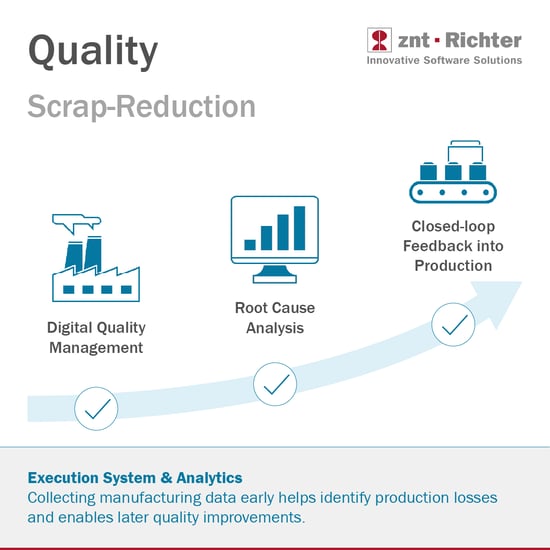
Digital Quality Management - Real-time defect detection, classification, and escalation ensure rapid response to deviations before they cascade.
-
Root Cause Analytics with Traceability - Link non-conformances to specific machines, batches, or process steps to isolate issues faster.
-
Closed-Loop Feedback into Production - Seamlessly feed quality data back into design and production logic to reduce repeat defects and optimize process windows.
-
Advanced Planning & Simulation - Use virtual production and digital twins to identify potential yield risks before physical deployment.
Why it matters
Reducing yield losses doesn't just cut scrap — it also:
- Increases capacity without adding equipment
- Lowers operating costs
- Protects brand credibility
- Shortens ROI cycles
It’s not enough to produce batteries at scale — they must be right first time.
Next in our series: Compliance – why it is essential for risk management, regulatory alignment, and continuous improvement.
Smart Factory Series – Battery Edition
#2: The Complexity and Rapid Evolution of Battery Cell Manufacturing Technology
#3: How Data-Driven Quality Strategies Safeguard Cost, Reputation, and Scalability